Dragon Ball’s White Rabbit of the Moon
Happy Easter, Dragon Ball Fans. To celebrate this day I’ve decided to dedicate a blog post to our favorite talking bunny, Boss Rabbit.
Who is Boss Rabbit? Don’t remember him? Well that’s not surprising considering he’s only in a single issue and episode. But even if you do, I doubt you know his full story.
In this article you’ll learn about Boss Rabbit’s origins in Dragon Ball as well as his roots in Japanese, Chinese and Indian legends as the white rabbit of the moon. Yes, it goes that far back!
Boss Rabbit’s depiction in Dragon Ball is simple and comical, but Akira Toriyama manages to connect him to an ancient source at the very end.
You may have been confused by this reference since it was intended for a Japanese audience. Today you’ll finally learn what it’s all about.
Follow me as we dive into the rabbit hole and see how far down it goes.
continue …
Kame Sennin and Kume Sennin – The Perverted Hermits

Every Dragon Ball fan is familiar with Kame Sennin, the perverted martial arts master. But how many of you have heard of Kume Sennin, the original perverted hermit?
Many of the characters seen in Dragon Ball were inspired by traditional or pop culture. It’s well known that Goku was inspired by the Monkey King from Journey to the West, as well as martial arts actor Jackie Chan.
But not all of the characters’ points of origin are as easy to see.
Today I will reveal for the first time the original inspiration for Kame Sennin.
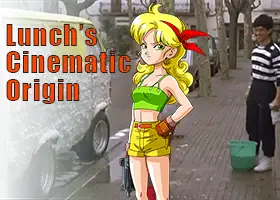
You’ll learn who Kume Sennin is, hear his legend, and see how his transformation into a Japanese pop cultural figure was later emulated in cinema and then once again by Akira Toriyama in Dragon Ball.
You’ll also learn why this legend is so essential to the Dragon Ball story, and how it’s so well integrated that you may never have realized it.
continue …
Potara, Potala, Potaraka
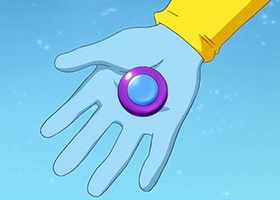
The Potara earrings are a device in Dragon Ball Z introduced near the end of the Majin Buu Saga. They allow one character to fuse together with another and increase their power level dramatically.
Everybody knows and loves them. But is there more to these simple earrings than meets the eye?
When all hope seems lost, Goku is given a Potara earring by Eldar Kai (Japanese: Rou Dai Kaioshin) that allows him to fuse with another person. They look like spherical ball earrings suspended by silver beads attached to a hoop that is placed in the earlobe.
Goku convinces Vegeta to wear one of the earrings while Goku wears the other. Immediately they are drawn to one another and their two bodies slam together, creating a new superhuman warrior.
The pair combined has the best of Vegeta’s pride and Goku’s rage, creating Vegetto, self-named after the combination of Vegeta and Kakarotto (Goku’s birth given Saiyan name).
According to Kanzentai.com, in The Super Exciting Guide: Story Volume, “On p.63 it describes the Potara fusion as being closer to multiplication rather than simple addition in the way it increases power. Supposedly, Vegetto’s battle power is equivalent to Goku’s battle power multiplied by Vegeta’s. Also according to the introduction of the Super Exciting Guide’s training section, all the information in it is based on data that was supervised by Toriyama, though we have no idea how extensive this supervision was.”
This makes Vegetto the strongest character in the entire manga.
But where did Akira Toriyama come up with the idea of Potara? What’s the story behind them?
Dragon Ball Zee or Zed?
Dragon Ball Z. How is it pronounced? Perhaps you never asked yourself the question, but it turns out there are a few different ways to say it. All because of the Z.
For example, is it pronounced Dragon Ball Zee, Dragon Ball Zed or something else entirely? The title of the show represents a linguistic problem with various answers that depend on where you live and what language you speak.
Why does it matter? Because the show is an international phenomenon with no agreed upon standard for how to pronounce its name. And the differences stand as another example of diversity seen within the localized versions of the Dragon Ball series.
To really understand why this is the case we have to learn a little about languages and world history from within the Dragon Ball perspective.
Dragon Ball’s Bloody Pond of Hell
Have you been to the Bloody Pond of Hell? It’s a great place to visit… They have row boats.
Many fans of Dragon Ball may be aware of the Bloody Pond in Dragon Ball’s Hell, but how many of them know that you can actually visit it?
It turns out that there is a real Bloody Pond in a city of Japan, and that it was the most likely source for Dragon Ball’s version.
This Bloody Pond also has an interesting part to play in traditional Japanese culture and society.
What is the Bloody Pond and why does this matter in Dragon Ball? And where exactly did Toriyama receive the inspiration for his Bloody Pond?