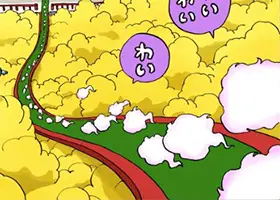
Dragon Ball’s White Rabbit of the Moon

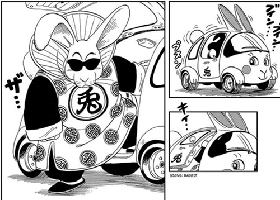
boss rabbit dragon ball carrot carHappy Easter, Dragon Ball Fans. To celebrate this day I’ve decided to dedicate a blog post to our favorite talking bunny, Boss Rabbit.

Who is Boss Rabbit? Don’t remember him? Well that’s not surprising considering he’s only in a single issue and episode. But even if you do, I doubt you know his full story.

In this article you’ll learn about Boss Rabbit’s origins in Dragon Ball as well as his roots in Japanese, Chinese and Indian legends as the white rabbit of the moon. Yes, it goes that far back!

Boss Rabbit’s depiction in Dragon Ball is simple and comical, but Akira Toriyama manages to connect him to an ancient source at the very end.

You may have been confused by this reference since it was intended for a Japanese audience. Today you’ll finally learn what it’s all about.

Follow me as we dive into the rabbit hole and see how far down it goes.
continue …

Kame Sennin and Kume Sennin – The Perverted Hermits

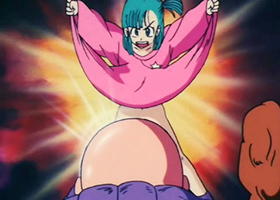
kame sennin bulma pervert dbz
kume sennin hermit painting dragon ball kame senninEvery Dragon Ball fan is familiar with Kame Sennin, the perverted martial arts master. But how many of you have heard of Kume Sennin, the original perverted hermit?
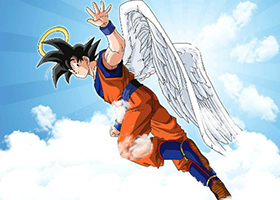
Many of the characters seen in Dragon Ball were inspired by traditional or pop culture. It’s well known that Goku was inspired by the Monkey King from Journey to the West, as well as martial arts actor Jackie Chan.

But not all of the characters’ points of origin are as easy to see.

Today I will reveal for the first time the original inspiration for Kame Sennin.

You’ll learn who Kume Sennin is, hear his legend, and see how his transformation into a Japanese pop cultural figure was later emulated in cinema and then once again by Akira Toriyama in Dragon Ball.

You’ll also learn why this legend is so essential to the Dragon Ball story, and how it’s so well integrated that you may never have realized it.
continue …

Gokuism – The Church of Goku

gokuism church of gokuDear friend, have you accepted Goku as your personal lord and savior? If not, then please listen to my Good News! The Church of Goku can help you increase your power level to Over 9,000 and follow in the sacred footsteps of lord Goku by training with King Kai, hallowed be thy name.

That’s right, there is now a Dragon Ball religion. It is called Gokuism, also known as The Church of Goku.

Gokuism is the belief that the principles of Dragon Ball provide a moral compass for one’s life, and that Goku is an ideal role model and moralistic person. By some definitions, it implies that Goku provides personal, global, and universal salvation, and that his death and resurrections were for our sake.

With so many religions already existing, why create this one based on Dragon Ball?

In today’s blog post you’ll learn where Gokuism came from, what its practitioners believe, and explore some thought provoking questions about this new faith.
continue …

Spirit Possession in Dragon Ball

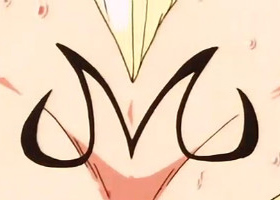
Majin Vegeta Face Majin Symbol DBZWould you be willing to trade your soul to achieve worldly desires, or in exchange for more power? What about allowing your body to be controlled by God, or a demon?

In Dragon Ball, Akira Toriyama incorporates spirit possession as a way to propel character development and plot.

This article explores how Toriyama was inspired by ancient belief systems and spirit possession traditions.
continue …

Shaolin Summit 2011

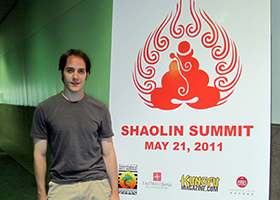
Derek Padula at the Shaolin Summit 2011

Derek Padula at the Shaolin Summit 2011

I attended the 1st Shaolin Summit as a reporter for The Epoch Times Newspaper and interviewed the Head Abbot of the Shaolin Temple, Shi Yongxin.
As a practitioner of Shaolin Gong Fu for over 12 years, and a student of East Asian studies, I thought it would be a lot of fun to go there, learn some new things and meet some good people.

The result was mixed.

continue …

Suffering Succotash

Ignorance is suffering.
To remedy ignorance one desires knowledge.
One suffers to achieve knowledge.
Yet knowledge is complex and burdensome.
Truth without attachment is ease.
One lets go of the attachment to knowledge.
Free of suffering.
Filled with emptiness.

Divine Combat – Zenkai Power

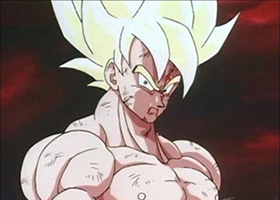
Super Saiyan Goku

Super Saiyan Goku

In this excerpt from The Dao of Dragon Ball we will learn more about the martial arts as depicted in Dragon Ball.

There are many concepts that are disclosed in this chapter, such as Qi (Ki), Gong, Divine Powers, and how the popular conception of Qi in the martial arts were employed by Akira Toriyama and mixed with traditional Buddhist and Daoist spiritual views.

This particular section of the Divine Combat chapter explains the concept of Zenkai Power, and what it means both within Dragon Ball and traditional cultivation practices of East Asia.
Zenkai Power

Goku Fires the Kamehameha with Kaio Ken

Goku Fires the Kamehameha

Zenkai is a term used by fans to refer to the sudden power up that occurs to a Saiyan after they recover from a near death experience. Saiyans are the only ones with the genetic potential for Zenkai, but anyone with Saiyan cells in their body is able to experience a Zenkai.

The Dragon World is one in which fighting and martial arts are the primary form of cultivation recognized and supported by the gods.

The Saiyans are primed for development in the Closed Fist style of cultivation. They learn by fighting and mature through physical conflict. They do not study a set of teachings, nor do they specifically try to improve their character through looking inward and letting go of attachments. They increase their power as they train with intensity and fight against increasingly difficult external opponents. Yet they sometimes experience mortal blows; the type that would kill a normal man. Upon recovering from these grievous wounds the Saiyan is instilled with even more power, so that they can then defeat their opponent the next time they do battle. It is an accelerated form of evolutionary adaptation, and a large part of what makes them such formidable opponents.

Dragon Ball fans translated Zenkai as “Complete Recovery.” But this translation is incorrect, and there are further meanings to this term within Asian culture, Buddhism and the martial arts.

continue …