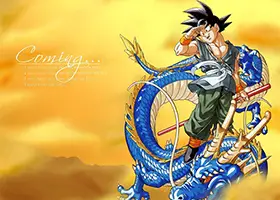
Kame Sennin and Kume Sennin – The Perverted Hermits

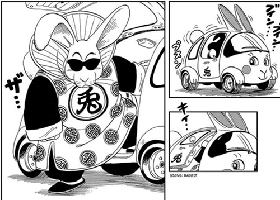
Every Dragon Ball fan is familiar with Kame Sennin, the immortal martial arts master and perverted hermit. But how many of you have heard of Kume Sennin, his legendary counterpart and the source of Akira Toriyama’s inspiration for this character?
Many of the characters seen in Dragon Ball were inspired by pop or traditional culture. It’s well known that Goku was inspired by the Monkey King from Journey to the West, as well as martial arts actor Jackie Chan. Likewise, there are characters throughout the series who were visibly inspired by the Terminator and Aliens films.
But not all of the characters’ points of origin are as easy to see.
In this article I will reveal for the first time the original inspiration for Kame Sennin.
You’ll learn who Kume Sennin is, hear his legend, and see how his transformation into a Japanese pop cultural figure was later emulated in cinema and then once again by Toriyama in Dragon Ball.
You’ll also learn why this legend is so essential to the Dragon Ball story, and how it’s so well integrated that you may never have realized it.
continue …
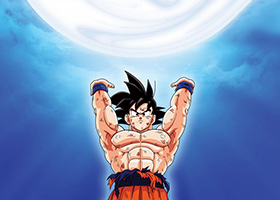
Spirit Possession in Dragon Ball
Would you be willing to trade your soul to achieve worldly desires, or in exchange for more power? What about allowing your body to be controlled by God, or a demon?
In Dragon Ball, Akira Toriyama incorporates spirit possession as a way to propel character development and plot.
This article explores how Toriyama was inspired by ancient belief systems and spirit possession traditions.
continue …
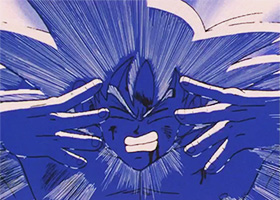
The Kaio Ken Explained
The following article will reveal the origin, history and inner mechanics of the Kaio Ken martial arts technique.
What is the Kaio Ken?
The Kaio Ken is a heavenly martial arts technique taught to Goku by North Kaio.
It is one of Goku’s signature techniques used during the first few sagas of Dragon Ball Z.
The Kaio Ken amplifies Goku’s speed, power, mental acuity and physical prowess for short bursts of high intensity.
In the early episodes of Dragon Ball Z, Goku was killed by his brother Raditz, passed into the afterlife, ran 1,000,000 kilometers (10,000 miles in the English dub) across Snake Way, and then trained with North Kaio on his planet.
Not even North Kaio could fully perfect the Kaio Ken, as it is a very advanced mind-body technique.
Goku eventually surpassed his master.
Divine Combat – Zenkai Power
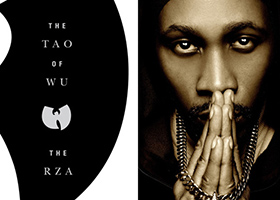
In this excerpt from The Dao of Dragon Ball we will learn more about the martial arts as depicted in Dragon Ball.
There are many concepts that are disclosed in this chapter, such as Qi (Ki), Gong, Divine Powers, and how the popular conception of Qi in the martial arts were employed by Akira Toriyama and mixed with traditional Buddhist and Daoist spiritual views.
This particular section of the Divine Combat chapter explains the concept of Zenkai Power, and what it means both within Dragon Ball and traditional cultivation practices of East Asia.
Zenkai Power
Zenkai is a term used by fans to refer to the sudden power up that occurs to a Saiyan after they recover from a near death experience. Saiyans are the only ones with the genetic potential for Zenkai, but anyone with Saiyan cells in their body is able to experience a Zenkai.
The Dragon World is one in which fighting and martial arts are the primary form of cultivation recognized and supported by the gods.
The Saiyans are primed for development in the Closed Fist style of cultivation. They learn by fighting and mature through physical conflict. They do not study a set of teachings, nor do they specifically try to improve their character through looking inward and letting go of attachments. They increase their power as they train with intensity and fight against increasingly difficult external opponents. Yet they sometimes experience mortal blows; the type that would kill a normal man. Upon recovering from these grievous wounds the Saiyan is instilled with even more power, so that they can then defeat their opponent the next time they do battle. It is an accelerated form of evolutionary adaptation, and a large part of what makes them such formidable opponents.
Dragon Ball fans translated Zenkai as “Complete Recovery.” But this translation is incorrect, and there are further meanings to this term within Asian culture, Buddhism and the martial arts.
Side by Side – Krillin
By reader request, here is an excerpt from The Dao of Dragon Ball that focuses on the character Krillin. This excerpt is from the Side by Side chapter in the Journey to the West section, where the characters from Dragon Ball are compared to those of Journey to the West.
Please note that the final version in the book may change.
Images seen in this blog post are not included in the book.
San Zuang / Krillin: A Warrior Monk
Speaking of warriors, another character who represents San Zuang in a few noticeable ways is Krillin, a monk from Orin Temple (Japanese: ???, Orinji).
Krillin is comparable to San Zuang most evidently because they are both monks. San Zuang is a Buddhist monk of a Tang Dynasty China sect with Idealist origins, and Krillin is in the order of Orinji. His shaved head and outward appearance are testament to the discipline and strength of his character. These are traits cultivated in the temple environment and would aid him both in life as well as death (the afterlife). He is 13 when first introduced.
Krillin’s Japanese name (????, Kuririn) alludes to his martial monk heritage: “Kuri” means chestnut (as a pun expressed in the funny shape of his bald head), and “rin” means tree. His name references the Shaolin Temple of China, as Shorin is the name given to the Shaolin School’s branch in Japan. The Shorin Temple is a Zen Buddhist school that uses martial arts as an aid to its spiritual cultivation method of Buddha Law cultivation.
His name has other humorous aspects as well. “Shorin” in Japanese is written as ??, which in English means “Few Trees” or “Young Forest.” “Orin” in Japanese is written as ??, which in English means “Many Trees” or (essentially) “Expansive Forest.” So his name is an inverse spoof on the Shorin. Orinji also sounds like the borrowed English word “orange,” which is another of the countless and clever food references created by Toriyama.
Potara, Potala, Potaraka
The Potara earrings are a device in Dragon Ball Z introduced near the end of the Majin Buu Saga. They allow one character to fuse together with another and increase their power level dramatically.
Everybody knows and loves them. But is there more to these simple earrings than meets the eye?
When all hope seems lost, Goku is given a Potara earring by Eldar Kai (Japanese: Rou Dai Kaioshin) that allows him to fuse with another person. They look like spherical ball earrings suspended by silver beads attached to a hoop that is placed in the earlobe.
Goku convinces Vegeta to wear one of the earrings while Goku wears the other. Immediately they are drawn to one another and their two bodies slam together, creating a new superhuman warrior.
The pair combined has the best of Vegeta’s pride and Goku’s rage, creating Vegetto, self-named after the combination of Vegeta and Kakarotto (Goku’s birth given Saiyan name).
According to Kanzentai.com, in The Super Exciting Guide: Story Volume, “On p.63 it describes the Potara fusion as being closer to multiplication rather than simple addition in the way it increases power. Supposedly, Vegetto’s battle power is equivalent to Goku’s battle power multiplied by Vegeta’s. Also according to the introduction of the Super Exciting Guide’s training section, all the information in it is based on data that was supervised by Toriyama, though we have no idea how extensive this supervision was.”
This makes Vegetto the strongest character in the entire manga.
But where did Akira Toriyama come up with the idea of Potara? What’s the story behind them?