Spirit Possession in Dragon Ball

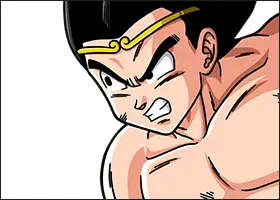
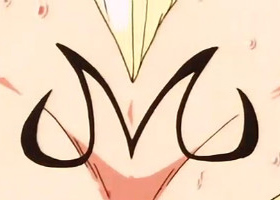
Majin Vegeta Face Majin Symbol DBZWould you be willing to trade your soul to achieve worldly desires, or in exchange for more power? What about allowing your body to be controlled by God, or a demon?

In Dragon Ball, Akira Toriyama incorporates spirit possession as a way to propel character development and plot.

This article explores how Toriyama was inspired by ancient belief systems and spirit possession traditions.
continue …

Anger and Focus in Dragon Ball

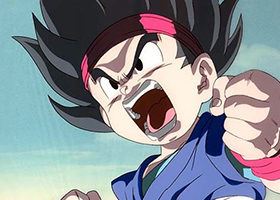
goku child ragePain sharpens focus. Comfort dulls it.

Anger and pain narrow the mind. Compassion and tolerance broaden the mind.
Pain and anger drive one to take immediate actions. Comfort and pleasure pacify the mind to linger in non-action.

In Dragon Ball, villainous forces run amok. Different beings vie for power and control of planets.

Both the Guardian named Kami and North Kaio are passive deities, wrapped in idyllic comfort. They are supposed to protect the people within their domain, but most of the time they don’t do anything.

Placed above the living world in stations of authority, they look out with a broad view at the sentient beings below. Yet they are more dedicated to watching events unfold then changing them. They pass time with voyeurism.

They do not use their vast powers and supernormal abilities. Laws are in place that state how they can interact with the lesser beings. Thus, with restraint in their heart and a broad long term perspective that things will work out on their own, they do not act. They only lament the current state of affairs. The beings below are left to fend for themselves.

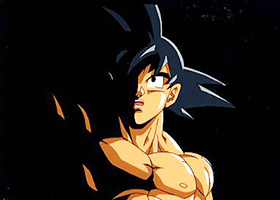
Goku’s life is uncomfortable. Whether under attack or in training, Goku is forced to become angry in order to ascend. Goku is a genuinely nice person, but when he is pushed to the limit he becomes filled with rage. He is a true spiritual warrior who directs short term anger in explosive waves.

Goku rage wavesThere were only a couple cases in Dragon Ball when Kami became angry enough to act.

continue …

Perceived Value and True Masters

Goku Half & Half

Goku Stands in the Shadows

A visitor to the site wrote to me recently asking, “By charging people money for this information aren’t you undermining everything it stands for?”

That’s a forthright and important question.  It’s also one I’ve struggled with for years.

Truth be told, he meant no disrespect by the question, as he was coming at it from a Buddhist perspective of compassion which I completely agree with.

I’ve practiced Shaolin Gong Fu for 10 years, and have taught it for free ever since I was capable enough to do so. My family and friends have sometimes said I’m a fool to give it away for free, but for me, Shaolin Gong Fu is sacred.

Shaolin Gong Fu originates in Buddhism and is (or at least used to be) a martial art that can enable someone to attain the level of Arhat, as taught by Bhodidharma. To charge for that just seems disrespectful. Of course I can understand if it’s your business and livelihood. That’s a different situation.

It’s my understanding that the lower the level, the more complicated and expensive. A great way is simple and free. The only thing you lose is karma, and what you gain is priceless… how could someone put a price on eternal enlightenment? continue …

9 Divine Aspects of Dragon Ball Z

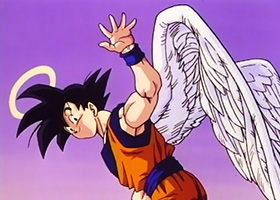
Goku with Angel Wings and Halo

Goku with Angel Wings and Halo

Have you noticed divine aspects in Dragon Ball, Dragon Ball Z or GT?  How about similarities between Goku and a certain spiritual teacher?  Or perhaps the way in which good always triumphs over evil?

If you did notice these it’s because they’re in there!  If you didn’t, then read this to learn more.

Here are 9 specific ways in which the divine shows up in Dragon Ball:

1.   Mythically Buddhist Origin’s

Loosely based on Journey to the West, a Chinese tale of pilgrims on a holy quest for the Buddhist sutra’s of India, Dragon Ball is rife with spiritual references of an East Asian perspective.  Sun Wukong (Japanese: Son Goku), The Handsome Monkey King, is the character that Goku is based on, and Sun Wukong himself is most likely based on Hanuman, the Indian deity and warrior.

King Enma, lord of the afterlife, is based on a Chinese and Japanese deity that weighs the amount of virtue and karma on a person’s soul to determine where they should be sent, Heaven or Hell, and we find that same character in Dragon Ball.

There are a multitude of other examples and references to the Buddhist stories that Japanese children like Akira Toriyama (the creator of Dragon Ball) would have been taught while growing up.

2.  Heaven and the Afterlife

Heaven plays a big part in Dragon Ball Z as Goku spends a lot of his time up there!

After sacrificing himself to save his son’s life (and the planet itself) Goku is sent to the afterlife where his soul is judged by King Enma.  The King determines that he is pure hearted enough to ascend up to Heaven, but Kami requests a special favor of the King and asks for Goku to be trained by North Kaio, Lord of the Northern Galaxy.  King Enma agrees and allows Goku to keep his physical body, now tricked out with a super spiffy halo. continue …